
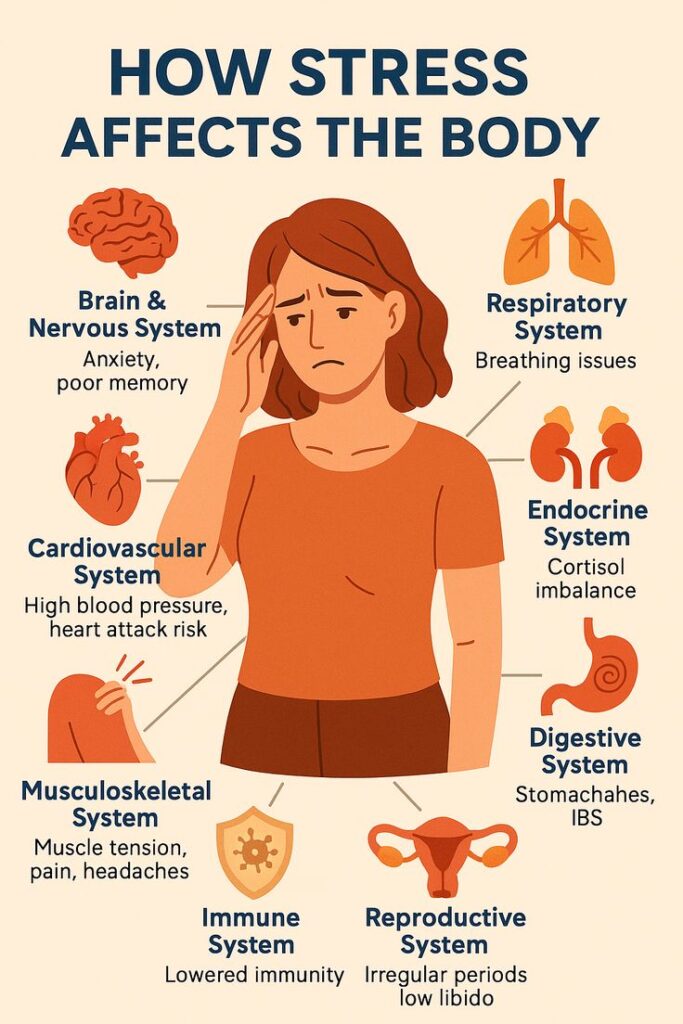
In today’s fast-paced world, stress has become an unavoidable part of life. While short-term stress can sometimes motivate us to perform better, chronic stress can have serious consequences for both the mind and body. Understanding how stress affects your body and learning ways to manage it is essential for maintaining overall health and improving quality of life.
Stress doesn’t just make you feel tense or anxious—it can trigger hormonal imbalances, weaken your immune system, and even affect your heart health. This article explores the multiple ways stress impacts your body and provides practical strategies to combat it.
How Stress Affects Your Body
1. Impact on the Heart
Chronic stress can increase your heart rate and blood pressure. Over time, this puts extra strain on your cardiovascular system and may increase the risk of heart attacks, strokes, or other heart-related problems. Studies have also shown that people under prolonged stress are more likely to develop inflammation in the arteries, which can worsen heart disease.
Tips: Regular exercise, meditation, and deep breathing techniques can help lower blood pressure and reduce heart strain.
2. Immune System Weakening
Stress hormones like cortisol can suppress your immune system, making it harder for your body to fight infections. Chronic stress can increase susceptibility to colds, flu, and other illnesses, and may even slow down recovery times after illness or surgery.
Tips: A balanced diet, sufficient sleep, and stress-relief practices like yoga can strengthen immunity and help your body fight infections more effectively.
3. Digestive Problems
Stress can significantly affect your digestive system. It may lead to conditions such as acid reflux, irritable bowel syndrome (IBS), bloating, or nausea. Hormonal imbalances triggered by stress can also alter gut microbiota, affecting digestion and nutrient absorption.
Tips: Eating smaller meals, staying hydrated, and practicing mindful eating can support digestive health during stressful times.
4. Mental Health Concerns
Long-term stress is closely linked to anxiety, depression, irritability, and mood swings. It can also affect concentration, memory, and decision-making. Chronic stress can trigger or worsen mental health conditions, making early stress management crucial.
Tips: Mindfulness meditation, journaling, and counseling can help manage stress and support mental health.
5. Sleep Disruption
High stress levels interfere with sleep patterns, causing insomnia, restlessness, or poor-quality sleep. Lack of sleep can worsen stress, creating a vicious cycle that affects mood, energy levels, and overall health.
Tips: Establish a calming bedtime routine, avoid screen time before bed, and consider relaxation exercises to improve sleep quality.
6. Weight Fluctuations
Stress triggers the release of cortisol, a hormone that can increase appetite and cravings for high-calorie foods, leading to weight gain. In some cases, stress may reduce appetite, causing weight loss. Both extremes can negatively impact your health if not managed properly.
Tips: Maintain a balanced diet, practice mindful eating, and engage in regular physical activity to regulate weight.
7. Skin and Hair Problems
Chronic stress can lead to skin conditions like acne, eczema, or psoriasis flare-ups. It can also accelerate hair loss or premature graying. Stress affects hormone levels and inflammation, which directly impact skin and hair health.
Tips: A healthy skincare routine, hydration, and stress-relief activities like yoga or meditation can help maintain skin and hair health.
8. Hormonal Imbalance
Stress affects the endocrine system and can disrupt the production of hormones, including those related to metabolism, reproductive health, and mood. Women may experience irregular menstrual cycles, while men may notice reduced testosterone levels under prolonged stress.
Tips: Balanced nutrition, exercise, and adequate sleep can help regulate hormones.
Ways to Combat Stress
Exercise Regularly
Physical activity is one of the most effective ways to relieve stress. Activities like walking, jogging, yoga, or strength training release endorphins, which improve mood and reduce anxiety.Practice Mindfulness and Meditation
Mindfulness meditation, deep breathing exercises, and progressive muscle relaxation calm the mind and reduce stress hormones in the body. Even 10–15 minutes daily can have a significant impact.Maintain a Healthy Diet
Eating a diet rich in fruits, vegetables, whole grains, lean protein, and omega-3 fatty acids helps support both mental and physical health. Avoid excessive caffeine, sugar, and processed foods.Prioritize Sleep
Getting 7–8 hours of quality sleep each night is essential for stress management. Create a bedtime routine that includes dim lighting, minimal screen time, and relaxing activities.Stay Socially Connected
Talking to friends, family, or a counselor provides emotional support and can help manage stress more effectively. Don’t isolate yourself during stressful times.Engage in Hobbies and Leisure Activities
Taking time for activities you enjoy—reading, painting, gardening, or music—helps your mind relax and reduces stress hormones.Limit Stimulants
Reduce consumption of caffeine and alcohol, as they can increase anxiety, disturb sleep, and worsen stress.Time Management
Organize your tasks, set realistic goals, and avoid overcommitting. Efficient time management reduces the feeling of being overwhelmed.Practice Gratitude and Positive Thinking
Keeping a gratitude journal or practicing positive affirmations can improve mental resilience and reduce the impact of stress on your body.Seek Professional Help
If stress becomes chronic and unmanageable, consulting a mental health professional is important. Therapy or counseling can provide coping strategies tailored to your needs.
FAQs About Stress and Its Effects
Q1: Can stress really make you sick?
Yes, chronic stress weakens the immune system, making the body more vulnerable to infections, heart disease, and digestive problems.
Q2: How does stress affect weight?
Stress can increase cortisol levels, leading to increased appetite and cravings, which may result in weight gain. Some people may also lose weight due to decreased appetite under stress.
Q3: Can stress cause hair loss?
Yes, high stress levels can lead to hair thinning, shedding, and even premature graying due to hormonal imbalance and inflammation.
Q4: What are the early signs of chronic stress?
Common signs include insomnia, irritability, headaches, digestive issues, rapid heartbeat, and fatigue.
Q5: Are there natural ways to relieve stress?
Yes, exercise, meditation, mindfulness, hobbies, proper sleep, and a healthy diet are all effective natural stress-relief methods.
Q6: Does stress affect mental health?
Absolutely. Chronic stress is linked to anxiety, depression, irritability, and reduced cognitive function.
Q7: How long does it take to see results from stress management techniques?
Results vary per individual, but many people notice improvements within a few weeks of consistent practice.
Q8: Can diet impact stress levels?
Yes, balanced nutrition supports hormonal balance and mental health, while excessive caffeine, sugar, and processed foods can worsen stress.
Q9: How does stress affect sleep?
Stress can cause difficulty falling asleep, frequent waking, or poor sleep quality, which in turn worsens stress levels.
Q10: When should I seek professional help for stress?
If stress interferes with daily life, relationships, sleep, or health for an extended period, it’s important to consult a healthcare professional.